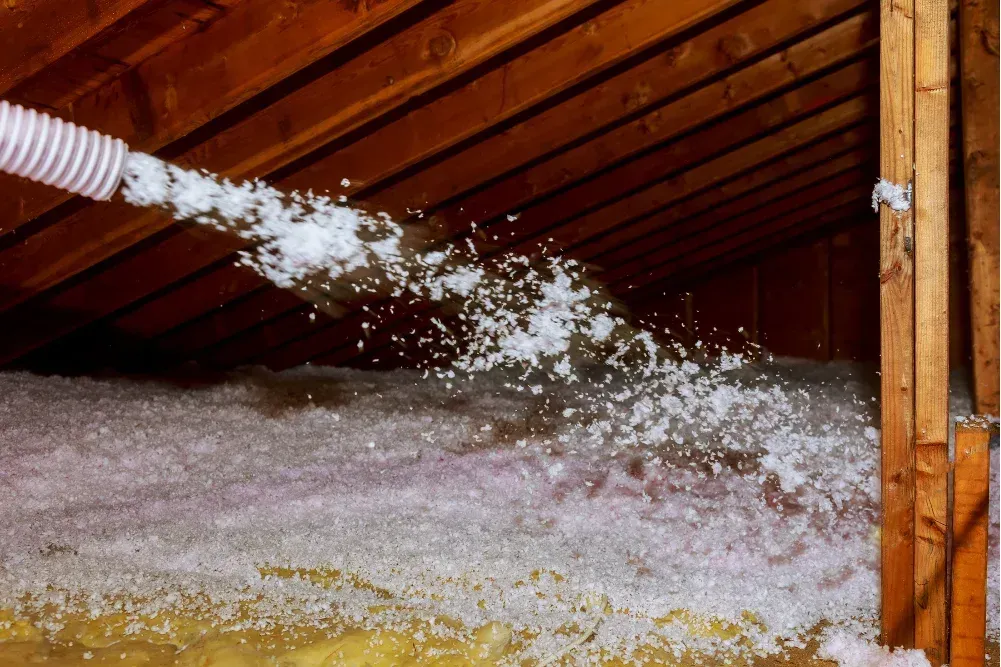
Blown-In Insulation Depth Requirements for Bay County Climate Zones
Blown-in insulation depth makes the difference between an energy-efficient home and one that bleeds money through the roof. Bay County homeowners in Panama City, Panama City Beach, Springfield, Southport, and Bayou George need specific blown-in attic insulation depths to meet Florida Building Code requirements while maximizing comfort and savings.
Getting the depth wrong means your HVAC system works overtime, your energy bills climb unnecessarily, and your home never quite feels comfortable. Let us break down exactly how much blown-in insulation belongs in your attic and why those numbers matter more than you might think.
Bay County Climate Zone Requirements for Attic Insulation
Bay County falls under Climate Zone 2 in the International Energy Conservation Code, which establishes minimum R-value requirements for residential and commercial properties. The code mandates a minimum R-38 for attic spaces, though energy efficiency experts recommend R-49 to R-60 for optimal performance in our hot, humid climate.
These requirements exist because Panama City and the surrounding areas experience intense summer heat that radiates through roofs into living spaces. Without adequate blown-in insulation depth, your air conditioning struggles to maintain comfortable temperatures while your utility bills skyrocket.
Florida Building Code inspectors verify insulation depth during construction, and homeowners upgrading existing properties should match or exceed these standards.
R-Value Performance Comparison Between Cellulose and Fiberglass Blown-In Insulation
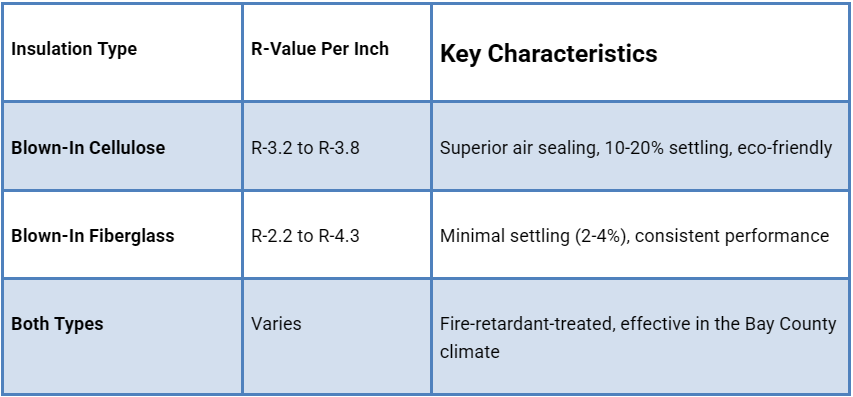
Blown-in cellulose insulation and fiberglass blown-in insulation deliver different R-values per inch, which directly affects the depth needed in your attic.
Cellulose typically achieves R-3.2 to R-3.8 per inch, depending on density and installation technique. Fiberglass ranges from R-2.2 to R-4.3 per inch based on product type and application method.
Cellulose offers superior air sealing because the smaller particles fill gaps more effectively, while fiberglass provides consistent performance with minimal settling over time. Both materials perform well in Bay County when installed to proper depths, and the choice often comes down to specific application requirements and budget considerations for the property owner.
How Much Blown-In Cellulose Insulation Depth Do You Need?
Calculating blown-in cellulose insulation depth requires dividing your target R-value by the material's performance per inch. For R-38 minimum, you need approximately 10 to 12 inches of cellulose. For recommended R-49, plan on 13 to 15 inches. Optimal R-60 requires 16 to 19 inches, depending on density.
Cellulose settles 10 to 20 percent over the first year, so professional installers add extra material to compensate. Homeowners in Bay County, including Panama City, Panama City Beach, Springfield, Southport, and Bayou George, should account for this settling when budgeting projects. The denser the installation, the less settling occurs, which is why experienced contractors matter when installing blown-in attic insulation.
Quick Depth Reference for Cellulose:
R-38 minimum = 10-12 inches
R-49 recommended = 13-15 inches
R-60 optimal = 16-19 inches
Fiberglass Blown-In Insulation Depth Calculations for Panama City Homes
Fiberglass blown-in insulation depth calculations follow the same principle, but with different numbers. Standard fiberglass at R-2.5 per inch needs approximately 15 inches to reach R-38. High-performance fiberglass, achieving R-4.0 per inch, only requires 10 inches for the same R-value.
Panama City contractors typically use medium-density fiberglass that delivers R-3.0 to R-3.5 per inch, requiring 11 to 13 inches for code minimum and 14 to 17 inches for R-49. Fiberglass settles minimally compared to cellulose, maintaining its installed depth for decades.
How does fiberglass perform in extreme heat? Quite well, actually, as the material does not degrade under Bay County temperature conditions.
What Happens When Your Blown-In Attic Insulation Is Too Shallow?
Insufficient blown-in insulation depth creates immediate and long-term problems. Your air conditioning runs constantly because heat radiates through inadequate insulation into living spaces. Energy bills spike 30 to 50 percent compared to properly insulated homes. Rooms develop hot spots where ceiling temperatures differ noticeably from floor temperatures. HVAC systems wear out faster from overwork, leading to expensive repairs or premature replacement.
Can shallow insulation cause moisture problems? Absolutely, because an inadequate R-value allows condensation to form where warm, humid air meets cooler surfaces. Bay County properties, including Panama City, Panama City Beach, Springfield, Southport, and Bayou George, with shallow blown-in attic insulation often show mold growth in attics and reduced indoor air quality.
The financial impact extends beyond monthly bills to include reduced property values and failed home inspections during sales.
Measuring and Upgrading Existing Attic Insulation Depth
Checking your current blown-in insulation depth takes minutes with a ruler or tape measure. Push the measuring tool down through the insulation until it hits the ceiling, drywall, or joist, then read the depth. Measure in multiple locations because blown-in materials settle unevenly. Look for compressed areas near vents or where foot traffic has compacted material.
Bay County homes built before 2000 often have 6 inches or less, well below current standards. Adding more blown-in cellulose insulation or fiberglass blown-in insulation on top of existing material works fine if the old insulation is dry and undamaged.
Wet or moldy insulation requires complete removal before installing fresh material. Professional assessment identifies whether topping off suffices or full replacement makes more sense.
Complete Insulation Solutions Beyond Blown-In Applications
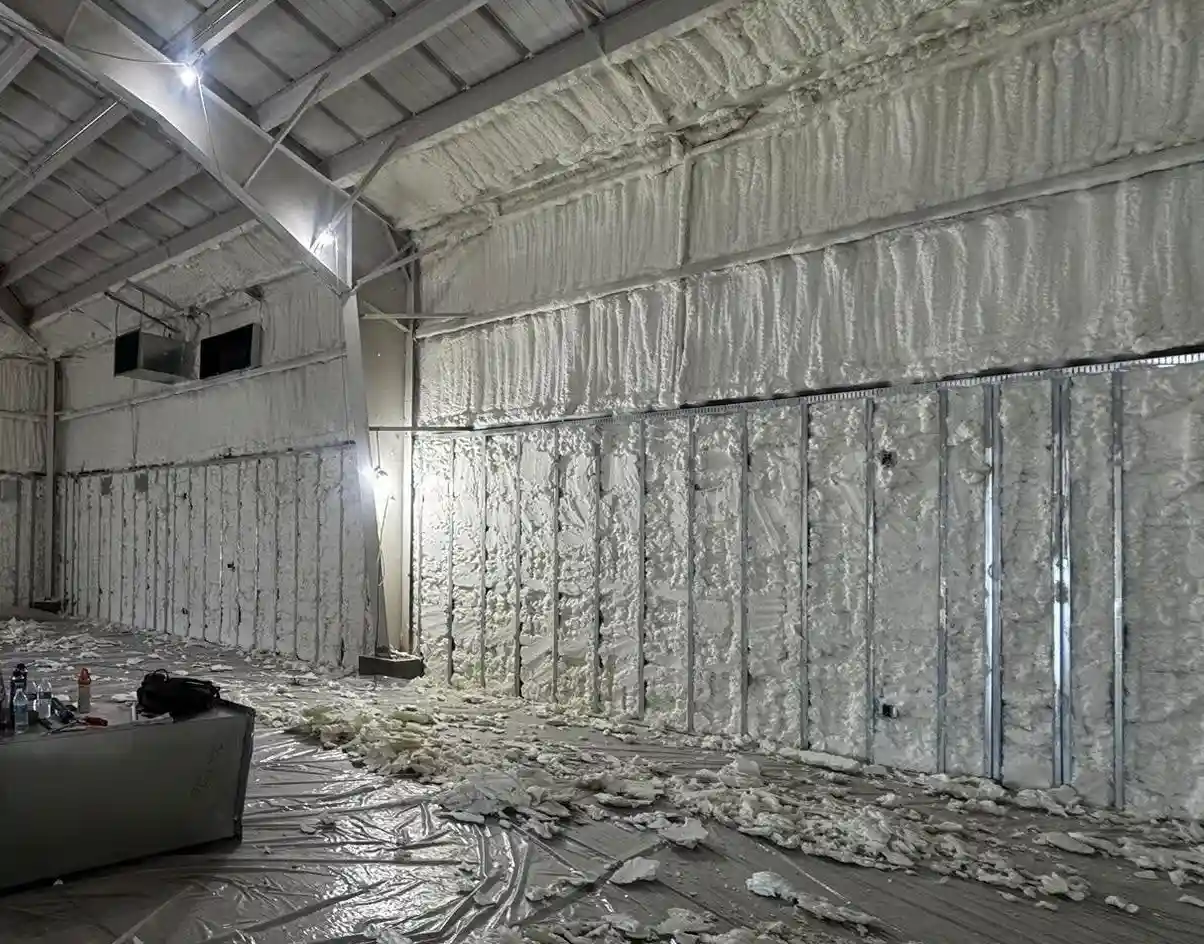
While blown-in insulation excels in attics, comprehensive home comfort requires the right solution for each space. Blue Line Insulation provides closed-cell spray foam insulation for superior moisture barriers in walls and crawlspaces, open-cell spray foam for sound dampening in interior applications, and fiberglass batt insulation for budget-conscious projects.
Our insulation removal services prepare spaces when old materials need replacement. We also apply intumescent fire-resistant coatings when building codes require additional protection.
Every Bay County property presents unique needs based on construction type, age, and usage. We evaluate all options during free consultations and recommend solutions that deliver optimal performance and value for residential and commercial clients across Panama City, Panama City Beach, Springfield, Southport, and Bayou George.
Expert Blown-In Insulation Installation from Blue Line Insulation
Getting blown-in attic insulation depth right the first time requires experience that Blue Line Insulation brings to every Bay County project. Our family-owned company has delivered 20 years of insulation expertise with over 10,000 successful installations across the Florida Panhandle.
We maintain an A+ BBB rating through honest service, accurate depth calculations, and quality workmanship. Our certified crews understand Climate Zone 2 requirements and install blown-in cellulose insulation or fiberglass blown-in insulation to specifications that exceed code minimums.
Free consultations include attic assessments, R-value recommendations, and transparent pricing. Call (850) 532-5070 today or visit flneedsprayfoam.com to schedule your free insulation evaluation.
FREQUENTLY ASKED QUESTIONS
How much does blown-in attic insulation cost per square foot in Bay County?
Blown-in insulation typically costs $1.50 to $3.50 per square foot installed, depending on material choice, depth requirements, and attic accessibility. Cellulose usually runs slightly less than fiberglass, though performance differences justify either investment for Panama City area homes.
Can I add more blown-in insulation on top of existing attic insulation?
Yes, adding blown-in cellulose or fiberglass over existing dry, undamaged insulation works perfectly and saves removal costs. Professional assessment confirms whether your current insulation condition supports topping off or requires complete replacement.
What R-value should I target for maximum energy savings in Panama City Beach?
A: R-49 to R-60 provides optimal energy efficiency for Bay County climate conditions, though R-38 meets minimum code. Higher R-values deliver better cooling cost reductions and comfort in our hot, humid summers, with payback periods typically under 5 years.
How long does blown-in insulation installation take for an average home?
A: Most residential attic insulation projects are completed in 3 to 6 hours, depending on square footage and access. Blue Line Insulation schedules installations to minimize disruption, and homeowners can return immediately after completion with no curing time required.
Does blown-in cellulose insulation attract pests or rodents?
Quality blown-in cellulose contains boric acid treatments that repel insects and discourage rodent nesting. The material itself provides no food value, making it less attractive to pests than organic materials without treatment.
How often should I check my attic insulation depth?
Annual visual inspections catch problems early, with professional assessments recommended every 5 years. Check after severe weather events, roof work, or if you notice energy bill increases that might indicate insulation settling or damage.
Which is better for Bay County homes, blown-in cellulose or fiberglass insulation?
Both materials perform excellently when installed to proper depths for Climate Zone 2 requirements. Cellulose offers superior air sealing and eco-friendly composition, while fiberglass provides minimal settling and consistent long-term performance. Blue Line Insulation helps you choose based on your specific needs.
Articles you might be interested in


