Bay County Building Code Requirements for Residential Insulation Projects
Building codes exist for good reasons, and Bay County, Florida, takes them seriously. When you are planning a residential insulation project, understanding local requirements saves you time, money, and frustration.
The good news is that working with experienced professionals who know these codes inside and out makes compliance straightforward.
Let us walk through what Bay County expects from your insulation installation and why these standards actually protect your investment.
Understanding Bay County Insulation Code Basics
Bay County follows Florida Building Code standards, which are among the strictest in the nation, thanks to our hurricane-prone climate. For residential insulation projects, these codes specify minimum R-value requirements based on climate zone and building type.
Northwestern Florida falls into Climate Zone 2, which means attics need R 38 minimum, walls require R 13, and floors over unconditioned spaces need R 19. These numbers represent thermal resistance, with higher R-values indicating better insulation performance.
Blue Line Insulation ensures every installation meets or exceeds these minimums using quality materials and proven techniques. Our team stays current with code changes because we have been serving Bay County homeowners since 2017. We handle the paperwork, coordinate inspections, and guarantee compliance so you can focus on enjoying your improved home comfort.
Why Fire Safety Codes Matter for Spray Foam
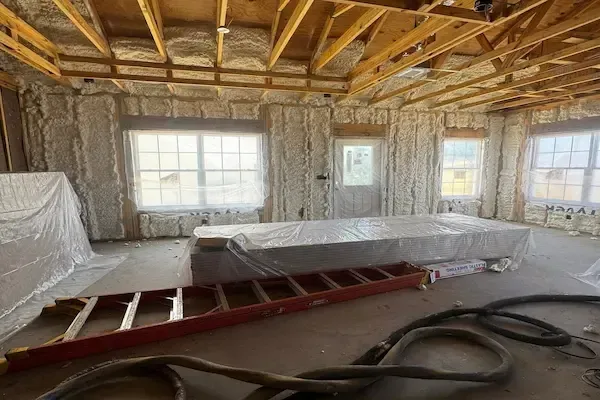
One common misconception is that spray foam insulation poses fire risks. The truth is that modern closed-cell and open-cell spray foam contains at least 15 percent fire retardants and meets strict flame spread requirements.
Bay County building codes require foam insulation to have a flame spread index below 25 and a smoke developed index below 450. Quality spray polyurethane foam products easily meet these standards. In certain applications, codes may require intumescent coatings that expand under heat to provide additional fire protection.
Blue Line Insulation applies these coatings when needed, though they are required in less than 5 percent of residential projects. Our licensed insulation contractors know exactly when codes mandate extra protection and when standard foam installation is sufficient. This expertise comes from completing over 10,000 installations across the Florida Panhandle.
Ventilation Requirements After Insulation Installation
Here is something that surprises many homeowners. Traditional fiberglass batt insulation and blown-in cellulose require attic ventilation because these materials allow air movement and moisture passage. However, spray foam insulation creates such an effective air seal that Bay County permits sealed attic designs without traditional venting.
This approach actually improves energy efficiency by bringing your attic space inside the conditioned envelope. Your HVAC system benefits from not fighting extreme attic temperatures, and you avoid the moisture issues that plague vented attics in humid climates.
Blue Line Insulation evaluates your specific situation during our free consultation to determine the best ventilation strategy. We explain how Florida building codes apply to your home design and recommend solutions that maximize comfort while maintaining full compliance.
What Happens During Code Inspections?
Bay County requires inspections for insulation installations to verify code compliance before walls get closed up. Inspectors check R-value coverage, proper installation techniques, fire safety measures, and vapor barrier placement where required. They also verify that licensed contractors performed the work and that materials match permit specifications.
Working with professional insulation services like Blue Line Insulation means these inspections go smoothly because we know exactly what inspectors look for. Our team schedules inspections at appropriate project stages, ensures all documentation is ready, and addresses any inspector questions immediately.
With our A+ BBB rating and track record of successful inspections, you can trust that your project will pass the first time. We have never had a failed inspection in Bay County because we do things right from the start.
Energy Code Compliance Beyond Basic Insulation
Bay County building codes extend beyond simple R-value requirements to address overall energy efficiency. Modern codes emphasize air sealing, which is where spray foam excels. While fiberglass insulation provides thermal resistance, it does nothing to stop air leakage that accounts for up to 40 percent of energy loss.
Closed-cell spray foam insulation and open-cell options both create continuous air barriers that help homes meet increasingly stringent energy standards. Blue Line Insulation uses blower door testing when needed to verify that your installation achieves the air-tightness targets set by Florida energy codes.
This attention to detail matters because properly sealed homes stay comfortable year-round, resist moisture intrusion, and cost less to heat and cool. Our family-owned business takes pride in delivering installations that exceed minimum requirements and provide lasting value.
Trust Blue Line Insulation for Code-Compliant Bay County Insulation Projects
Navigating building codes should not feel overwhelming. Blue Line Insulation brings nearly 20 years of experience ensuring Bay County residential insulation projects meet every requirement.
Our licensed team handles permits, coordinates inspections, and guarantees that your installation exceeds Florida Building Code standards. Whether you need spray foam insulation for new construction or blown-in attic insulation for retrofits, we deliver professional results backed by our A+ BBB rating.
We have completed over 10,000 installations across Bay County, Lynn Haven, Parker, Callaway, Southport, and surrounding areas. Every project starts with a free consultation where we explain how codes apply to your specific situation and provide transparent pricing with no hidden fees.
Call (850) 532-5070 today or visit flneedsprayfoam.com to schedule your code-compliant insulation assessment.
Let us handle the details while you enjoy the comfort and energy savings of properly installed insulation.
Frequently Asked Questions
Do I need permits for insulation projects in Bay County?
A: Most residential insulation installations require permits to ensure code compliance and proper inspections. Blue Line Insulation handles all permit applications and coordinates required inspections as part of our service.
What R-value does Bay County require for attic insulation?
A: Bay County follows the Florida Building Code, requiring a minimum R 38 for attics in Climate Zone 2. We typically exceed this with spray foam or blown-in insulation that delivers R 38 to R 60, depending on application.
Does spray foam insulation meet Bay County fire safety codes?
A: Yes, quality spray foam contains fire retardants and meets flame spread requirements set by Bay County building codes. Intumescent coatings provide additional protection when required by specific applications or inspector requests.
How long does it take to get insulation permits approved?
A: Permit approval typically takes 3 to 7 business days in Bay County, depending on project complexity. Blue Line Insulation submits complete applications to avoid delays and coordinates timing with your schedule.
Can I install insulation myself to save money?
A: Bay County requires licensed contractors for spray foam installation and inspects work for code compliance. DIY insulation risks failed inspections, code violations, and safety issues that cost more to fix than hiring professionals.
Articles you might be interested in
Panama City Beach Rental Property Insulation Tips for Maximum ROI
7 Signs of Poor Insulation in Your Home | Panama City Insulation Experts
Insulation Energy Savings Florida | Save 30-50% on Energy Bills Panama City
How Much Does Spray Foam Insulation Cost in Panama City, FL? 2026 Price Guide
Intumescent Fireproofing for Steel Beams and Why Your Building Needs It


